8 Best Startup Business Credit Cards in Canada (2026)


Choosing the right startup business credit card means looking beyond rewards. In this guide, we compare eight business cards available in Canada in 2026, breaking down repayment models, credit limits, personal guarantee requirements, fees and eligibility criteria to help you find the right fit for your startup.
As your business grows, features like spending controls, approval workflows, receipt collection and accounting integrations can help simplify expense management. We’ll explore which cards best suit different startup needs, from revolving credit and unsecured spending capacity to multi-currency spending and balance-backed options.
Key takeaways
- Choose a card based on how your startup manages cash flow. Revolving credit cards let you carry a balance, charge cards require full repayment on a set cycle, and prepaid or balance-backed cards use funds you already hold.
- Look beyond rewards and headline credit limits. Personal guarantee requirements, eligibility criteria, foreign exchange fees and usable spending capacity can have a bigger impact on your business than cashback or points.
- Prioritize tools that scale with your team. Cards with spending controls, approval workflows, receipt collection and accounting integrations can help growing startups manage expenses without adding finance admin.
Quick comparison
The table below lines up all eight cards, what they’re best for, the main benefits and tradeoffs, and starting prices so you can shortlist a few before reading further.
Startup business card criteria: what you need to ask
As you’re looking at different credit card options, there are five questions you need to ask that will narrow down your options before you even get into rewards: how the balance is repaid, whether the founder is personally liable, how much capacity is actually usable, what cross-border spend costs, and how much finance work the card removes.
1. How is the balance repaid?
Business cards fall into three repayment models. The difference is when the money leaves your account and whether you pay interest for the delay. You’ll need to confirm if the repayment model for your card is:
- Revolving: You carry a balance past the due date and pay interest on it. It’s the only model here that actually extends financing. It fits a genuine short-term gap, but once a balance outlives the grace period, the interest cost outweighs any rewards rate.
- Charge: You spend to an approved limit, then clear the balance in full on a fixed cycle; usually every 15 to 30 days. You get purchasing power without interest, but you can't carry a balance month to month.
- Prepaid: Spend draws on cash you already hold, so there's no repayment and no credit decision. You're paying for card controls and multi-currency handling, not financing.
You want to match the model to your cash cycle. A large limit does nothing for you if the repayment date arrives before your cash does.
2. Is the founder or cardholder personally liable for the bill?
Liability determines who is on the hook if the bill goes unpaid. A personal guarantee lets the issuer pursue the individual (often the founder) if the business does not pay. Corporate liability, by contrast, puts the company on the hook, not the founder personally. Some cards use a joint and several agreement, which allows the issuer to pursue the owner, the business, or both for the balance owed.
Make sure you understand the full terms of the liability agreement before applying, as each card has its own setup. For example, Float Charge does not require a personal guarantee but does require a minimum of $50,000 CAD in cash or its equivalent. Loop, on the other hand, relies on personal guarantees until a business reports at least $10M in profit.
The provider can also continue to review the company’s finances over time and may adjust your credit limit or tighten spending permissions if the business’s financial position changes.
3. How much of the limit is actually usable?
Usable capacity is the amount your startup can actually spend on the card in day-to-day use. “Up to” limits describe the top end of a range, but your real spending power depends on what the provider approves after underwriting, any minimum requirements to qualify, and any cash collateral or balance requirements that effectively cap purchases.
4. What does cross-border spend cost?
“Low FX” can describe several different things. A platform may charge to convert money inside an account, let you spend and repay in a matching currency or add a foreign transaction fee when the purchase currency doesn’t match the card.
Choose a card that matches the currencies your company earns, spends, and pays in. Teams with heavy USD and CAD spend would benefit from currency-specific cards like Float Charge, while companies with heavy spend across Europe might choose another option.
5. How much finance work does this card remove?
Getting your startup company credit cards alone doesn’t solve spend control. A growing team may need employee spending controls, temporary limits, receipt collection, Canadian tax coding, reimbursements and clean accounting sync. Controls help prevent messy cleanup at month-end closing.
Basic bank cards often provide statements, alerts or expense views. Scotia adds Visa Spend Clarity with employee controls, receipt photos and accounting exports. Platforms such as Float, Ramp and Rippling go further by connecting cards to policies, receipts and accounting workflows.
Now that you know what to ask, it’s time to deep dive into 8 different options for startup business credit cards.
Float Charge Corporate Card: Best for scaling Canadian startups that qualify for unsecured Charge capacity
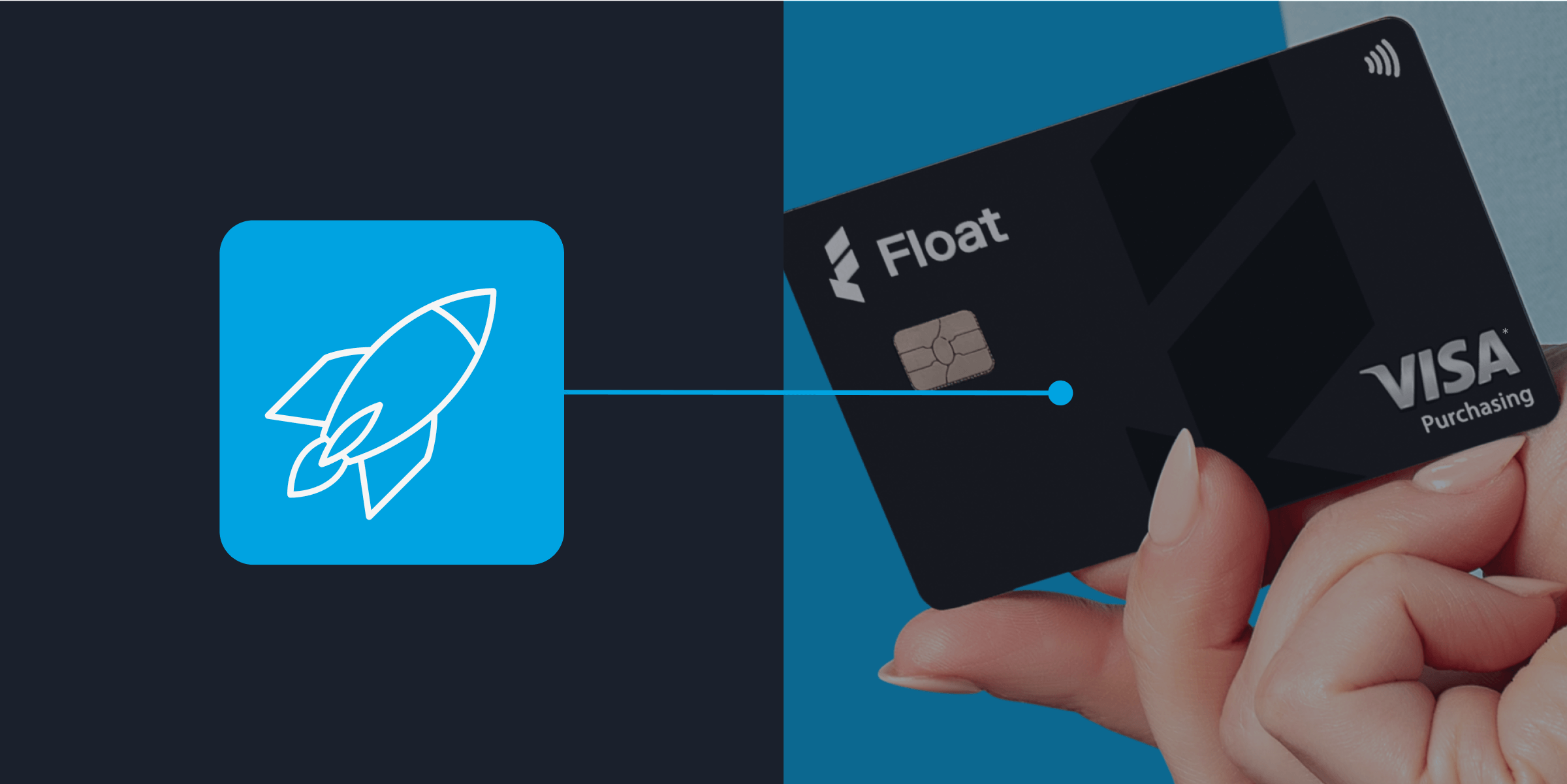
Float Charge Corporate Card is the strongest fit if your Canadian startup has meaningful runway, pays card balances in full and needs both purchasing capacity and tighter finance operations. It pairs an individualized Float Charge limit of up to $3M with employee cards, approval policies, receipt collection, Canadian tax coding and accounting sync.
Float does not require a personal guarantee. It evaluates the company based on factors such as industry, revenue and company performance, cash balances, and more. Current eligibility requires a registered Canadian partnership or corporation to have at least $50,000 CAD in cash or guaranteed investment certificate (GIC) equivalent, plus either 12+ months of operating cash or consistent profitability and positive cash flow.
You can issue CAD and USD cards, set temporary or recurring limits, route requests through approval policies and collect receipts before syncing transactions to QuickBooks Online, Xero or NetSuite on eligible plans.
Professional and Enterprise plans also include Float Intelligence, which uses AI to suggest general ledger and tax codes for card transactions. Suggestions are only made when the agent is fully confident, and finance teams can review and apply them individually or in bulk.
Float Charge suits a qualifying Canadian startup that pays in full and needs unsecured capacity, no personal guarantee and the controls and accounting workflow to manage a growing card program.

Try Float for free
Business finance tools and software made by Canadians, for Canadian businesses.
TD Business Cash Back Visa Card: Best for no-fee spending in TD’s bonus categories
If most of your business spending falls into one of TD’s bonus categories, the TD Business Cash Back Visa can turn that spending into 2% cashback with no annual fee. However, most other purchases earn only 0.5%, and the program terms generally cap each named category at $15,000 in annual spend.
Cash Back Dollars don’t expire as long as the account remains open and in good standing, but they are typically applied as an annual statement credit. That timing is less flexible than an on-demand redemption program.
Carrying a balance can quickly erase rewards. TD fits a small team whose spending reliably earns 2%. Otherwise, businesses are better off with a card that offers more benefits.
CIBC bizline Visa Card: Best for potentially lower-rate revolving credit
For a startup that expects to carry a balance, the rate offered can matter far more than rewards. The CIBC bizline Visa trades a rewards program for potentially lower variable borrowing.
CIBC requires at least $15,000 in individual annual income and determines the purchase rate based on the applicant’s personal credit bureau report and other information.
CIBC CreditSmart, a reporting tool CIBC users get access to with their bizline account, provides category views, monthly budgets and alerts after purchases are made. It doesn’t provide pre-spend approvals, receipt collection or accounting sync.
CIBC bizline earns its place when carrying a balance is the job, the applicant can accept personal liability and the offered Prime-based rate is lower than the revolving alternatives available to the business.
BMO Blue Rewards Business Mastercard: Best for no-fee Blue Rewards earning
BMO is most useful to a business that already values Blue Rewards partners or its travel portal and wants to avoid an annual fee. Businesses that value travel rewards (including those from the previous BMO AIR MILES No-Fee Business Mastercard) over spend management capabilities might consider this option.
The card also offers BMO PaySmart installment options, but it doesn’t combine receipts, card policies and accounting sync into a spend-management workflow.
Blue Rewards points can’t be compared directly to a cashback percentage without a current redemption value you expect to use. Price that redemption first, then compare the result with other cards’ cashback programs.
Ramp Canada: Best for US-based teams
Ramp is an American platform that fits companies standardizing one policy and accounting stack across Canada and the US, particularly when Microsoft Business Central or Sage Intacct anchors the finance workflow. Cards include customizable spending controls and integrate with accounting and expense management tools. CAD cards are available in physical and virtual form, while Canadian USD cards are virtual only.
Note that the Ramp platform is not currently available in Quebec or the territories (Yukon, Northwest Territories, and Nunavut).
Rippling: Best for employee-lifecycle-driven card controls
Rippling deserves a final shortlist spot when the company already relies on Rippling employee data to drive issuance, limits and offboarding.
Rippling can issue physical and virtual cards by role, update limits when an employee changes jobs and revoke access during offboarding–all pulled from the same employee records. Receipt collection by text, general ledger sync, reimbursements and bill pay keep employee and finance workflows in one place.
Loop: Best for revolving credit across four currencies
Loop adds revolving credit across CAD, USD, GBP and EUR, but most startups give the lender two forms of recourse in return. Companies with gross profit below $10M must provide a personal guarantee, and Loop takes a general security interest over business assets.
Loop’s Visa facility, issued by Equitable Bank, offers sales-linked limits of up to $1M and payment terms of up to 55 days. The card maintains separate balances in four currencies, so you can repay a purchase in the same currency without an FX fee. When you need to convert currencies, plan-based markups range from 0.1% to 0.5%.
Limits can be updated as the company's sales change. Loop also offers physical and virtual employee cards, spending rules, approvals, receipt matching and QuickBooks or Xero integrations.
Venn: Best for balance-backed multi-currency spending
With Venn, a “$50,000 limit” is not additional credit. It only works if the business already has enough money in its Venn account to support that limit. In practice, the amount you can actually spend is the lower of the cash in the account and the limit you set.
Venn provides employee cards and spend controls for funds you already have, not new working capital. Because the limit is backed by your own balance, Venn can offer it without a personal credit check or guarantee. Venn also automatically matches card spend to CAD, USD, GBP and EUR balances.
Paid tiers add spending policies, while Pro adds multi-step approvals and AI accounting agents. QuickBooks and Xero integrations support reconciliation.
Venn’s genuine fit is four-currency cash movement with fixed account pricing for a small business willing to back every dollar of card capacity with its own funds.
Choose a card that can grow with your startup
Getting a credit card for your startup isn’t just about the highest limit or best rewards. As your company grows, your card becomes part of how you manage spending, control access and keep finance operations running smoothly. The right solution can give your team flexibility without adding work or sacrificing visibility. So look for a card and platform that can scale with your business, not just one that works today.
If you’re a Canadian startup looking for unsecured spending capacity, CAD and USD cards, flexible spend controls and scalable finance workflows, Float Charge is worth looking at. Float combines corporate cards with approvals, expense management, accounting integrations and other financial tools in one platform, giving growing businesses more control and visibility over company spending. If your business isn’t ready to qualify for credit, Float also offers prepaid corporate cards, so you can access corporate card functionality without needing to qualify for credit.
Frequently asked questions
What’s the difference between a business credit card, a corporate card and a charge card?
The labels overlap, so focus on repayment and liability. A business credit card usually offers revolving credit that can carry a balance with interest. A charge card usually requires full payment at the end of a short cycle. “Corporate card” often describes a company-managed program with centralized liability and employee controls, but providers use the term differently. See our business credit card vs corporate credit card guide for details.
Can a Canadian startup get a business card without a personal guarantee?
Yes, some business credit card programs may not require a personal guarantee, subject to business underwriting and eligibility requirements. Float Charge, for example, provides access to unsecured business credit without collateral requirements. The specific personal guarantee requirements for individual providers should be confirmed with each provider.
Which startup business card is best for US-dollar spending?
For CAD and USD operations, Float and Ramp both support matching-currency card workflows. Float charges 0.25% for CAD/USD conversion with Float FX, while mismatched-currency card purchases have a 2.5% FX fee. If you also need GBP and EUR, compare Loop’s revolving four-currency facility with Venn’s balance-backed four-currency cards. The right choice depends on whether you need new credit or are moving cash you already hold.
How much do startup business cards cost?
Published card fees range from $0 to $199 annually. Spend platforms may also charge monthly per-user or account fees, additional platform fees and transaction charges.
How do I know if I qualify for Float Charge?
To qualify for Float Charge, your organization needs to meet the following criteria:
- Currently a registered Canadian company (partnership or corporation)
- At least $50,000 CAD of cash (or equivalent, such as GICs or money market funds) on hand
- 12+ months of operating cash or consistently profitable
- Exclusions: Non-profits, cryptocurrency businesses
Your credit limit is determined based on a comprehensive evaluation of various factors, including your business fundamentals, industry, revenue/company performance, current debt levels, cash balance, liquidity and credit utilization rate.