Business credit cards with no personal guarantee for Canadian founders


For Canadian founders, the biggest roadblock to getting a corporate credit card is often the personal guarantee. This requirement ties your business credit card and company debt directly to personal assets, such as a house, savings, or credit score, leaving you exposed if the business can’t cover its balance.
While many banks still rely on a personal guarantee, a few Canadian cards offer an alternative route. The strongest no-personal-guarantee card is one that removes personal liability without forcing the business to give up working capital, personal credit privacy, or Canadian coverage.
The short answer: If you take the time to search, there are a few options for Canadian business owners looking for business credit cards without a personal guarantee as part of the application. The strongest all-round pick is Float Charge, which extends unsecured credit with no personal guarantee and no personal credit check, underwritten on your business’s cash rather than the founder’s personal score.
Key takeaways
- Skip the personal guarantee: Several business cards in Canada offer ways to separate business debt from your personal assets, though eligibility and terms vary.
- Choose between prepaid and unsecured credit: Pre-funded cards let you spend your own cash, while options like Float Charge provide unsecured credit without a personal guarantee.
- Compare coverage, limits, and fees: Check personal credit requirements, provincial availability, multi-currency support, and repayment terms to find the right fit for your business.
What is a personal guarantee on a business credit card?
A personal guarantee is your personal promise to repay the debt if your business can’t. When you apply for a traditional business credit card, banks often require the founder or an executive to co-sign. If the company defaults, the bank can pursue your personal assets: your home, your savings and your credit score are all on the line.
Until recently, Canadian founders had few alternatives, leaving half of SMBs feeling as though traditional banks just aren’t interested in supporting them.
Banks rely on this practice to reduce risk, especially with businesses that may lack a long credit history or substantial reserves. Many entrepreneurs assume that incorporation fully protects them from liability. If something goes wrong, they expect only the company will take the hit. But a personal guarantee overrides those protections. Even if your business is incorporated, liability still falls back on you as an individual.
What a personal guarantee costs you
The real cost shows up when things go wrong. When a cash flow crunch hits, a guaranteed balance stops being the company's problem and becomes yours. That fear is often enough to make founders avoid the credit that would help grow their business in the first place.
Shopping for a corporate credit card with no personal guarantee can keep a bad quarter from turning into a personal financial nightmare. The trade-off is that a no-guarantee card usually ties your limit to your cash or revenue rather than opening the larger revolving line a personal guarantee can support. For most founders, keeping personal assets separate from business debt is worth that.
The two kinds of no-guarantee card: charge or prepaid vs. unsecured credit
The decision between these two types of no-guarantee cards starts with one question: do you need working capital or only clean separation between business and personal risk?
If you need to separate it out, a charge or pre-funded card is your simplest option and will likely get approved faster. If you need to spend before your cash comes in, you'll want a no-guarantee credit line instead. Just be sure to read the agreement closely. A “no personal guarantee” headline sometimes sits above a limited guarantee buried in the fine print.
Before filling out any applications, check whether the application touches your personal credit and whether the card works where you operate. In Canada, you want to confirm Quebec coverage, Canadian sales tax and CAD plus USD cards.
Charge or pre-paid
A charge or pre-funded card lets you spend only up to a balance you have already funded, so there’s nothing to guarantee. You get instant liability separation and usually no credit check, but no working capital: the card can’t front you money you don’t already hold. Watch the add-ons, though, because a charge card’s optional financing or statement-extension feature can carry its own personal guarantee even when the base card doesn’t.
Unsecured credit
The second is genuine unsecured credit, underwritten on the business rather than the founder. Here the provider looks at your revenue, cash flow and operating history. It extends a real line of credit without requiring a personal guarantee. You get spending power beyond your current cash, which is the point for a growing company, but you have to qualify on your business’ fundamentals.
The best no personal guarantee business credit cards for Canadian founders
The best fit depends on which tradeoff matters most: access to working capital, personal credit privacy, Canadian coverage, or multi-currency support. First, an overview of each card, then we’ll dive into the options.
Float: no-guarantee credit and a pre-funded card, built for Canada
Float is built for Canada, including Quebec, and offers service in both English and French. It supports Canadian sales tax, including QST, and issues both CAD and USD cards.
Float pairs no-guarantee credit with the tools a Canadian business needs to control spend day-to-day. Teams can manage cards, payments, receipts and accounting sync in one platform instead of stitching together separate tools. Virtual cards are unlimited, and customers can earn up to 1% cashback on eligible card spend after the first $25K of monthly spend.
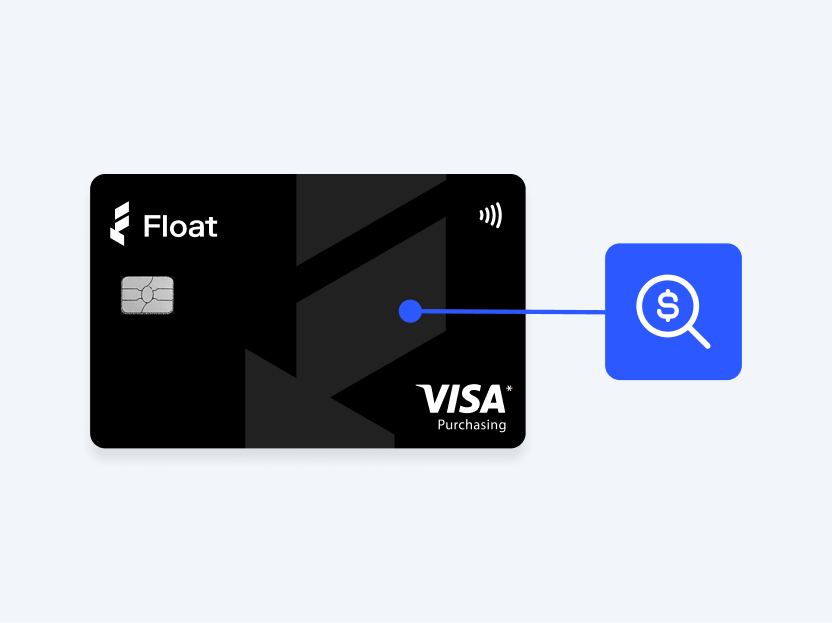
Float’s corporate cards come in two funding models: Charge and pre-funded. Neither carries a personal guarantee.
The pre-funded model works like a charge card against your own balance. Businesses load funds, issue cards and spend against their available balances. Businesses can spend up to the lower of their available business balance or the card’s spending limit, without relying on a credit facility. Businesses can apply in minutes and, once approved, can start spending as soon as their account is ready.
Float Charge is the unsecured, interest-free credit option. It carries no personal guarantee and no personal credit check for founders. Instead, Float evaluates the business using factors including revenue and company performance, cash balance, liquidity, debt, credit utilization, industry and credit history, and offers up to $3 million in credit.
Because Float Charge extends real credit, it looks for business fundamentals:
- Registered Canadian company (corporation or partnership)
- At least $50,000 CAD in cash or equivalents on hand consistently
- 12+ months of operating cash, or consistently profitable.
- Charge limits start at $10,000, with customers expected to use at least 70% of their approved limit
Businesses that don't meet Float Charge's cash, operating history, or profitability requirements may not qualify for Charge, and non-profits and cryptocurrency businesses may be excluded. Businesses that don't qualify for Charge may still be eligible for the pre-funded model. Confirm your exact terms and limits directly with Float.

Try Float for free
Business finance tools and software made by Canadians, for Canadian businesses.
Ramp: a US-built card now underwriting Canadian companies
Ramp is a corporate card that is issued to registered Canadian corporations, underwritten on the business with no personal guarantee and no personal credit pull.
It gives CAD and USD cards on one login, rewards on spend, and assigns Canadian sales-tax codes (GST, HST, PST and QST) for QuickBooks Online, Xero, NetSuite OneWorld and Sage Intacct.”
Ramp fits a Canadian company that wants a strong, pure spend card and doesn’t need a business account bundled in. It collects CAD statement payments by pre-authorized debit, and its Canadian offering covers cards, expenses, reimbursements, bill pay and accounting sync without a deposit account, so there's no interest-earning balance sitting alongside the cards. That gap counts most for a business that wants its account and cards in one place.
It’s important to note that Ramp doesn't currently serve Quebec, Saskatchewan, Yukon, the Northwest Territories or Nunavut. If your business is in any of those parts of Canada, Ramp isn’t an option.
Loop: multi-currency credit for cross-border sellers
Loop is a corporate credit card built around foreign exchange. It offers a no personal guarantee card with one major caveat: businesses must have at least $10 million in gross profit. Below that threshold, Loop still requires a personal guarantee. If you’re below that in gross profit and looking to avoid a personal guarantee, you’ll need to explore other options.
It’s a strong fit for Canadian e-commerce and cross-border businesses. Loop lets you issue cards in CAD, USD, GBP and EUR. You can repay each balance in the currency you spent, avoiding the conversion fees that erode margins with US and overseas suppliers.
Loop sets limits up to $1 million by assessing your business, and the card itself is not reported to your personal credit file, so approval scales with the company rather than the founder. Repayment terms run up to 55 days with no annual fees. Rewards tied to the card come in the form of points rather than cash back.
Because Loop extends real credit, businesses should confirm the guarantee terms in the cardholder agreement before applying. If most of your spend is domestic, Loop’s multi-currency advantage goes to waste. A simpler card serves you better.
Venn: a multi-currency charge card for spending your own balance
Venn offers a Mastercard charge card funded by your account balance, so no credit is extended and nothing needs to be guaranteed. It earns 1% cashback on all spend and supports CAD, USD, EUR and GBP accounts. For a business that keeps healthy cash and mainly wants clean cards, multi-currency accounts and no FX drag, it’s a good fit.
Venn’s ceiling is built into its model: because it only draws from your own balance, it can’t serve as a source of working capital, so a business that needs to spend ahead of its cash is in the wrong category of card here. Venn also doesn’t currently serve Quebec businesses, ruling it out for a Quebec-based company.
Keep: a card plus growth capital for scaling SMBs
Keep’s card is repaid in full each statement with no interest. While Keep offers low-fee extension plans, those require a personal guarantee.
The base card itself carries no personal guarantee. Limits are based on business traction and can layer on up to $1 million in growth capital without taking equity.
Keep currently covers every province except Quebec. The card clears in full each statement, so it suits a company that pays its balance off monthly more than one that needs to carry working capital between terms.
Brex: no personal guarantee, but requires a US entity
Brex underwrites based on business fundamentals with no personal guarantee, but its eligibility requirements put it out of reach for most Canadian businesses. Every applicant needs a US EIN, US incorporation, US operations and a US physical address, and Brex serves companies that have either taken equity investment or cleared roughly $500,000 in annual revenue.
If you already run a US entity, it’s worth a look. For Canadian-only businesses, the other options here are the practical shortlist.
Protect your founders while powering growth
For Canadian business owners, the personal guarantee has long been a hidden cost of accessing credit. It puts financial security at risk, undermining the very reason many founders incorporated in the first place.
The good news is there’s finally another way. Float offers two ways to spend without a personal guarantee: Float Charge provides unsecured, interest-free working capital, while the pre-funded card lets businesses spend against their own funds.
With spend controls, multi-level approvals and seamless accounting integrations, Float helps finance leaders protect personal assets, keep spending in check and close the books faster.
If you’re ready to scale without betting your personal future, it’s time to explore Float’s corporate cards. They’re a Canadian solution built to give your business flexibility, control and peace of mind.
Frequently asked questions
Can you get a business card with no personal guarantee in Canada?
Yes, though the field is narrow. Float, Venn and Ramp don’t require a personal guarantee, and Keep’s base card doesn’t either, though its statement-extension plans do require one. For example, Float evaluates businesses for credit based on their financial fundamentals, including revenue, cash balance, liquidity, debt and credit history, without requiring founders to personally guarantee the debt.
Do no-personal-guarantee cards still check my personal credit?
Not always, but it’s worth confirming before you apply as what is checked is different for different providers. Float’s pre-funded card and Float Charge both skip a personal credit check since Charge underwrites on business cash rather than personal credit. Venn’s card options do the same. Loop says the card itself isn't reported to your personal credit file.
How is a charge card different from a credit card here?
A charge card is repaid in full at the end of each term or statement and doesn’t allow you to carry a balance, so it charges no interest. A credit card lets you carry a balance and charges interest on it. Several no-guarantee options are charge cards, which is part of how they avoid the guarantee: they extend little or no revolving credit.
Is a no-guarantee card safe if my business defaults?
Because your personal assets aren’t pledged against the balance, a default stays with the business rather than following you home. A limited-guarantee clause in the fine print is the one thing that would undo that protection, so check for it before you rely on the card.