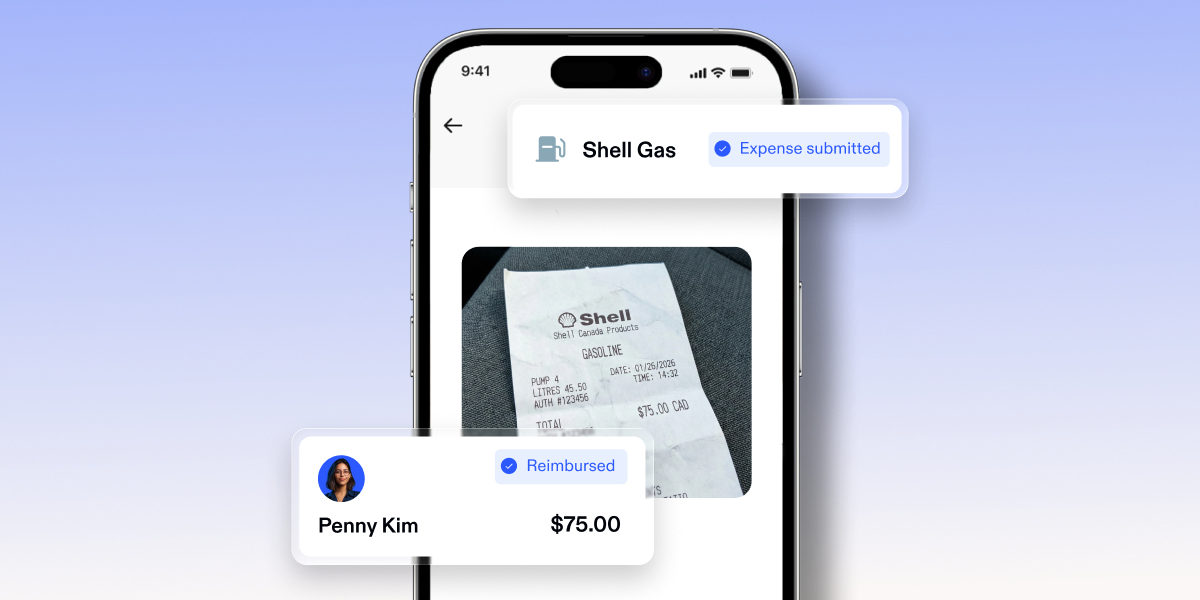
Best Business Virtual Corporate Cards in Canada in 2026


Virtual business credit cards can be a game changer for Canadian businesses. You can issue a card in seconds, set spend limits and merchant locks at creation and close any card instantly if something looks off.
Underneath that, virtual cards still run on one of the four funding models: prepaid, debit, charge, and revolving credit. That choice determines your cash flow, liability, and how much reconciliation work your finance team owns.
This guide compares Canadian virtual credit cards on what matters day to day: funding model, CAD and USD support, foreign exchange (FX), spend controls, receipt capture, tax coding, accounting integrations, bill pay, reimbursements and eligibility.
New to virtual cards? Start with Float's guide to how virtual credit cards work in Canada.
Key takeaways
- Choose the right funding model. Virtual business cards can be prepaid, debit, charge or revolving credit. Each affects your cash flow, repayment terms, liability and eligibility differently.
- Look beyond card issuance and spend limits. Compare CAD and USD support, FX fees, spending controls, receipt capture, Canadian tax coding and accounting integrations to understand how each provider fits your finance workflow.
- Consider the full finance workflow. Some platforms combine virtual cards with expense management, bill payments and reimbursements, helping reduce manual work at month-end. The best fit depends on your business structure, spending needs and the tools your team already uses.
What are virtual corporate cards?
A virtual corporate card is a randomly generated 16-digit number that is linked to your company’s existing corporate credit card account. This means your team can make online purchases without exposing your actual corporate credit card details, adding an extra layer of security.
Although transactions completed with a virtual card use a separate card number, they will still appear on your company's regular credit card statement, making it easy to track spending.
Pro tip: Want to get more intel on virtual credit cards as a whole? Read more about the history of virtual cards in our deep dive article, Discover: Virtual Credit Cards for Canadian Businesses
Virtual corporate cards vs. virtual credit cards: Key differences
Virtual corporate cards and virtual credit cards are often used interchangeably, but they have key distinctions. A virtual corporate card is linked to your corporate account (either a prepaid account or charge account) while a virtual credit card is linked to your personal credit or business credit card account. Virtual credit cards have limited controls, spend management, and other integrations, making them less ideal for team-based business spending.
On the other hand, while both types of virtual cards use randomly generated 16-digit numbers and add a layer of security for online purchases, virtual corporate cards offer several benefits designed specifically for Canadian finance teams and businesses.
Virtual corporate cards linked to corporate accounts typically have higher limits compared to personal virtual credit cards. Some virtual corporate card providers, like Float, include expense management software that provides detailed, real-time visibility into spending, along with custom controls to keep expenses in check.
Why use a virtual corporate card?
Virtual corporate cards have gained popularity among Canadian startups for their convenience and flexibility. These digital payment solutions offer a range of features designed to simplify expense tracking, enhance security and provide greater control over spending.
Incorporating virtual corporate cards into your startup’s financial management strategy can yield numerous benefits for your business, including:
- Enhanced security: By generating unique corporate card numbers for each transaction, virtual cards minimize the risk of fraud and unauthorized purchases.
- Simplified expense management: Virtual cards let you say goodbye to traditional expense reports. Transactions are automatically categorized and synced with your accounting system, saving time and reducing manual data entry.
- Flexibility for one-off purchases: Virtual cards are ideal for single-use scenarios, such as purchasing a new software service. You can create a card specifically for that purpose and deactivate it once the transaction is complete.
- Enhanced vendor management: With a virtual corporate card, you can create vendor-specific virtual cards. This makes it easy to oversee recurring bills and large one-time vendor payments.
- On-track project budgets: Use virtual corporate cards to stay within project budgets. Create a virtual card for each major project to keep a closer eye on spending. Simply deactivate the card once the project is over.
- Controlled department spending: Stay on top of departmental budgets by assigning a virtual corporate card number for each department. Temporarily increase or decrease spending limits based on organizational priorities and departmental needs.
Key features to look for in a virtual corporate card or credit cards in 2026
When evaluating virtual card options for your Canadian business, there are several key features to consider:
- Instant card issuance: Look for providers that offer immediate access to virtual cards upon approval, allowing you to start making purchases right away. Some options can take days or weeks.
- Customizable spending limits: Look for cards that let you set specific spending limits for each virtual card, giving you more control over employee expenses.
- Integration capabilities: Choose a virtual card that integrates seamlessly with your existing accounting software for automated expense tracking and reconciliation.
Compare the best virtual business credit cards in Canada
Float, Loop, Venn, Ramp, Rippling, and CIBC are the virtual cards worth comparing for Canadian businesses. Keep was another popular option that is since not accepting new customers. Wise and the bank-run virtual-payables programs solve narrower payment needs. We cover those separately later in the article.
Float: Best for Canadian SMB finance workflows
Float combines virtual cards, expense management, reimbursements and payments in one platform, giving finance teams greater control and visibility over business spending.. Teams can create cards for employees and specific spending needs, with custom limits and approval policies to keep spend and budgets aligned.
Float offers both pre-funded spending and Charge. Float’s pre-funded option uses available funds, while Float Charge gives eligible businesses access to interest-free spending capacity on 15- or 30-day payment cycles without a personal guarantee.
Float supports CAD and USD cards, helping Canadian businesses manage expenses across currencies. The accounting workflow supports Canadian tax requirements (GST, HST, PST and QST), including multi-part codes. Transactions sync to QuickBooks Online, Xero or NetSuite, depending on your plan.
For Alvéole, an urban beekeeping company with teams across Canada, the U.S., and Europe, this accounting workflow helped cut month-end close work from nearly a week down to two days.
“Float makes it easy to send the receipt right with the GL code, which saves our finance team hours,” says Jessica De Fanti Teoli, Accounts Payable Specialist, Alvéole
For Canadian businesses managing spend across teams and currencies, Float brings cards, reimbursements, bill payments, and expense management together in a single platform.
Want to see why over {{customer-count}} Canadian businesses use Float? Book a Float demo.

Try Float for free
Business finance tools and software made by Canadians, for Canadian businesses.
Loop: Best for multi-currency e-commerce and import/export spend
Loop Basic includes up to 20 virtual cards at a 0.47% conversion rate. Plus and Power offer unlimited virtual cards (under Loop's fair-use policy) with conversion rates of 0.27% and 0.12%.
The platform pairs corporate cards with CAD, USD, EUR and GBP accounts and global payment tools, so a purchase in an enabled currency skips FX conversion. Paid plans add approval controls, multi-approver payment rules and expense reimbursements.
Loop is a good fit for businesses that prioritize supported-currency accounts and international payments. Just make sure the Canadian tax code handling and ERP integrations fit your accounting workflow.
Venn: Best for a no-monthly-fee entry plan
Venn's Essentials plan is free and supports CAD, USD, GBP and EUR accounts, global payments and offers 2% interest on CAD and USD balances.
FX runs 0.45% on Essentials, 0.35% on Plus and 0.25% on Pro and Custom. The number of virtual cards you can access scales by plan: 20 on Essentials, 50 on Plus, and unlimited on Pro and Custom. The 1% cashback caps at $5,000 per month for Essentials and $25,000 for Plus, with uncapped eligible spend for Pro and Custom.
Venn connects to QuickBooks Online and Xero. Plus plans add automated receipt collection and accounting rules; Pro adds spend policies and multi-step payment approvals.
A small team can test cards, accounts and payments for free before deciding whether the paid controls, tax workflows and support justify an upgrade.
Ramp: Best for teams standardizing on Ramp
Ramp's Canadian product includes physical CAD cards, virtual CAD and USD cards, and expense management. With local issuing and full spend-management coverage, it's a solid pick for companies already running Ramp across multiple entities.
Ramp is a good fit for teams standardizing policies, cards and AP across entities. Fit depends on funding mechanics, edge-case fees and French-language support.
To note: Ramp offerings are limited by location. If you are based in Quebec or Saskatchewan, you can’t open a Ramp account.
Rippling: Best for employee-data-based controls
When someone changes roles or leaves, Rippling can update card limits or cut from the employee record. Policies can be based on role, department and location. The Canadian corporate card offers physical and virtual cards, receipts, and general ledger workflows, with no personal credit checks or guarantees.
Sole proprietors and businesses in Quebec both aren't eligible, Employee-lifecycle data is Rippling's main advantage for card controls, but Canadian teams still need to assess currency, FX, accounting and provincial availability.
Keep: Best for rewards-led card programs
Keep pairs a business credit card with rewards, expense controls, receipt collection, financing and other financial tools. It offers virtual cards and QuickBooks Online sync.
Note: Keep is no longer accepting new clients, so its services may not be available to new applicants.
Top-tier plans offer up to 56 fee-free days, while lower tiers offer 31 or 38 days. Card transactions carry a 3% FX fee, with banking FX features handled separately. Earn rates and repayment terms vary by account.
Looking for an alternative? If you’re interested in what Keep offers, check out Float for business cards, expense management, receipt collection, bill payments and accounting integrations all in one platform.
CIBC Visa Spend Clarity: Best for CIBC Business Plus customers
Eligible CIBC Business Plus cardholders get unlimited virtual cards, approvals, transaction tracking and receipt attachment. Virtual cards can be used for one-time or recurring purchases with custom expiration dates and are designed for online purchases.
CIBC is a good fit if you want virtual cards inside an existing bank credit-card relationship and can handle AP, reimbursements and tax coding elsewhere.
Adjacent options for narrower payment needs
Wise and commercial virtual card programs address narrower payment needs than the products above. Wise handles multi-currency debit spending, while BMO and American Express extend existing bank relationships with virtual cards.
Each does a single job well rather than managing your whole spend, so it's only worth a look if that job is your priority.
Wise Business: Best for multi-currency debit spending
Wise Business offers physical and digital team debit cards, permissions, accounting connections and receiving account details in 22 currencies. It uses the mid-market exchange rate and shows conversion fees separately. Canadian businesses pay a one-time $55 fee for the full feature set.
Wise is a good option for businesses that handle a high volume of international transfers and debit card spending across currencies. It isn't a charge or revolving-credit product, so look for AP and tax coding support separately.
Bank and commercial virtual-card options: Best for controlled supplier and procurement payments
BMO and American Express offer controlled virtual numbers for commercial purchasing or supplier payments. TD availability of virtual cards depends on the specific commercial use or banking tier you use, so you have to talk to somebody to see what you can access.
These work well if you already bank with one of these institutions and want something built for commercial payables. Compare implementation, payment volume, ERP requirements and supplier acceptance before choosing one over a dedicated employee-card platform.
How to compare virtual cards for your business
The best card fits how your business funds spend and how your team closes the books, not the one with the biggest sign-up bonus.
Run every option on your shortlist through the checklist below, and bring one real transaction to each demo: a USD software subscription, a recurring vendor payment or an employee purchase will expose far more workflow detail than a generic product tour.
The table below breaks down what to compare, what to ask each provider, and why it actually matters for your day-to-day. Skim it before your first demo so you know which answers are dealbreakers versus nice-to-haves.
Compare your virtual credit card options
When you start looking for a virtual credit card, it’s worth shopping around and testing how each platform actually handles day-to-day spending–not just comparing fees and rewards on paper. After all, your finances are key to your business. The right partnership can make things easier for your team, while the wrong one can cause major headaches.
The fastest way to judge any platform is to see how it handles a transaction from start to finish. Ask the Float team to demonstrate a workflow using your own requirements and confirm which steps are available on your plan and which require separate eligibility.
Book a Float demo today to see how these virtual cards are just part of a platform built to help Canadian businesses..
Frequently asked questioins
What is the best virtual business card in Canada?
For Canadian businesses evaluating virtual business cards, Float is a strong option for Canadian SMBs that want cards connected to approvals, receipts, Canadian tax codes, accounting sync, CAD/USD operations, Bill Pay and reimbursements. Teams report measurable impact after switching, such as cutting month-end close from nearly a week to two days (Alvéole) or from 15–20 days to under 5 (Wahi).
The right provider depends on your requirements, so compare card controls, currencies, accounting integrations, tax handling, pricing, eligibility and the finance workflows your team needs to manage.
Is a virtual business card the same as a business credit card?
A virtual business card and a business credit card can overlap, but they describe different features. A virtual card refers to the card's digital format, while the underlying funding model can vary.
A business credit card usually provides revolving credit. Unpaid balances accrue interest under the card's terms, while charge-card balances are due on a fixed payment cycle.
Which providers should Canadian businesses compare for USD spending?
Canadian businesses that spend in USD should compare providers based on the currencies supported, card availability, FX costs and how funds move through the platform.. Float, for example, supports CAD and USD cards and a 0.25% CAD/USD conversion fee.
When comparing providers, check both currency conversion costs and any foreign transaction fees that may apply when you make purchases in a currency different from the card's denomination.
Do Canada's major banks offer virtual cards for small businesses?
Yes, some major Canadian banks offer virtual cards for small businesses. CIBC, BMO, and American Express offer some virtual payment programs for purchasing or supplier payments.
Why do tax codes matter for virtual cards?
Virtual cards reduce cleanup only when transactions arrive with the details accounting needs. Canadian teams should check support for GST, HST, PST, QST and multi-part codes where separate taxes apply.
Float supports multi-part tax codes and maps tax and GL codes to accounting workflows, helping finance teams reduce manual coding and improve transaction data accuracy.
Should every vendor get its own virtual card?
A dedicated card can help with recurring subscriptions, ad platforms and vendors where finance wants a dedicated limit. If a number is compromised, the team can replace it without disrupting unrelated payments.

Best business credit cards
Compare top options, fees and benefits for Canadian companies.