American Express vs. Float: Corporate Card Comparison for Canadian Businesses


From office supplies to business travel to vendor payments, Canadian startups and small businesses often have a growing list of expenses. These companies require an efficient, cost-effective corporate card solution that meets their business needs and supports future growth.
Two leading contenders are Float and American Express, and the core differences come down to a few concrete factors: Float charges no annual fee and offers a charge or prepaid funding model with no personal guarantees, while Amex corporate cards range from $45 to $699 depending on the type of card (we will dive into the differences below) annually and operate on a charge card model. Float also bundles features like bill payments and employee reimbursements into one platform, while Amex focuses on the card itself and requires businesses to build a stack of finance tools to cover their needs.
American Express offers two main types of cards for businesses: business credit cards and corporate cards. Their business credit cards are issued to individuals and typically require a personal guarantee, which means the card is tied to your personal credit rather than the business itself and you are personally liable for the debt. Since these Amex business credit cards aren't true corporate cards and don’t align with how most businesses manage spend at scale, we’ll set them aside for now and focus on corporate card options.
On the other hand, Amex corporate cards—also known as charge cards—are issued directly to businesses and come with a different set of terms and requirements. These are more comparable to what modern fintech providers like Float offer. Unlike Amex, however, Float doesn’t issue any cards to individuals. Instead, Float offers only true corporate cards, available on either a charge card or prepaid model with up to $3M in business credit and no personal guarantees or ties to an individual’s credit. This model is designed to give businesses greater flexibility, control, and scalability as they grow.
So which corporate card is right for you?
This article will break down the details about each corporate card provider to help you make the right decision for your business.
What does an American Express corporate card offer?
American Express is a global credit card provider widely known for its high-reward cards with high limits for individuals and businesses. The provider offers five types of corporate charge cards for Canadian companies. Here are the cards and their annual fees:
- American Express® Corporate Card: $45
- American Express® Corporate Gold Card: $75
- American Express® Aeroplan® Corporate Card: $120
- American Express® Corporate Platinum Card: $499
- American Express® Aeroplan® Aeroplan Corporate Reserve Card: $699
With all charge cards, businesses cannot carry over a balance from one month to the next and must pay their balance in full each month. In terms of eligibility requirements, companies may need to provide financial statements, references, credit reports, in some cases personal guarantees and other criteria to be able to get a card. Once approved, card issuance typically takes one week.
American Express corporate card benefits
There are a number of American Express corporate card benefits that appeal to Canadian startups and small businesses, including:
- Membership Rewards points for every dollar of corporate spend
- Travel perks such as preferred pricing on flights, concierge services and free lounge access
- Access to expense management tools with program management, reporting and expense tracking features
Each type of American Express card offers unique advantages. For example, the American Express® Corporate Card benefits include earning one point for every dollar of business spend. While the American Express Platinum corporate card benefits include earning 1.25 points for every dollar spent on business.
What does a Float corporate card offer?
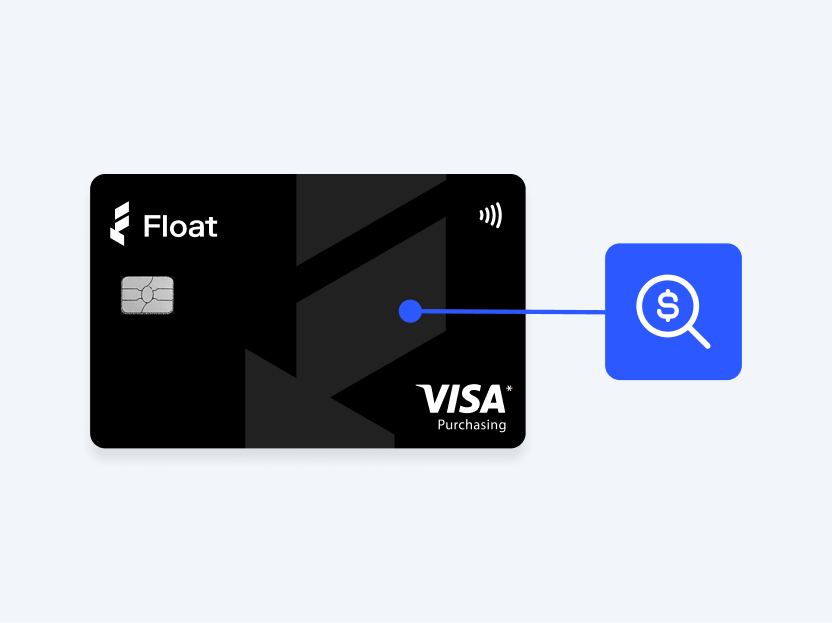
Float is an all-in-one finance platform built specifically for Canadian businesses, combining both strong card offerings and innovative software. We offer corporate cards issued by Visa for Canadian transactions and Mastercard for US transactions. Canadian startups and small businesses can use either a charge (credit-based) or a prepaid funding model.
When it comes to annual fees, Float charges $0 for corporate cards. Float’s corporate card has the same acceptance rates as a traditional Visa or Mastercard credit cards, and Canadian businesses can apply for the card online within 10 minutes.
For Float’s charge model, businesses can apply for unsecured credit terms with high limits up to $3,000,000 with no credit checks, no personal guarantees and no monthly fee. For both the charge and prepaid model, Float offers up to 2.5% CAD/2.75% USD interest on all deposits, with no cash lockups and account opening is completed in under 24 hours.*
*Timing may vary depending on account type, verification requirements and client responsiveness.

Learn more about Float
Get a 2-minute guided tour through our platform.
How do Float and American Express corporate card benefits compare?
*cashback on spend over $25K
**2.5% CAD/2.75% USD interest on funds when balance is over $25K, 2.5% interest on funds when balance is below $25k
When to choose American Express
Amex corporate cards work well for small owner-operator businesses where the owner can also benefit personally from rewards points and travel perks. For a lot of founder-led companies, that personal upside (flights, lounge access, concierge services) is a meaningful part of the appeal, even if it's not strictly a business expense.
They’re also a good fit for companies with simple month-end reconciliation requirements due to predicable and manageable transaction volume. For businesses that can offset the high annual fees with the value of rewards, the rewards earned can be substantial enough to offset the high annual fees, making the cost more of a wash than a real expense.
Canadian businesses that primarily incur Canadian-dollar expenses can use Amex cards without paying foreign exchange fees, since domestic CAD transactions on a CAD card don't trigger FX charges. The gap shows up as soon as a USD expense enters the picture. Those transactions incur FX fees on a standard CAD card, whereas Float lets businesses hold and spend in both currencies without the conversion cost.
That said, Amex corporate cards offer one part of the financial stack. It doesn’t include easy ways to pay bills or reimburse employees for expenditures.
When to choose Float
Float, on the other hand, offers an all-in-one unified payments solution for Canadian companies that includes corporate cards, bill payments and reimbursements, covering every finance workflow. Float is ideal for startups, small and medium businesses, as well as large companies. Companies that have high amounts of card spending, need to reconcile expenses more efficiently or have to navigate USD spending, will benefit greatly from using a Float corporate card.
Canadian businesses can layer on financial rewards with Float, from 1% cashback to low foreign exchange rates to a 2.5% CAD/2.75% USD yield on funds held. In addition, businesses that use Float get the added benefit of free software for paying bills and reimbursing employees, which enables them to automatically codify transactions and eliminate chasing receipts, saving considerable time and effort at month end.
American Express vs. Float: Which corporate card is right for you?
Whether you choose American Express or Float depends on your business's needs and future goals. What’s important to remember is that corporate card ROI is no longer just about points. With Float, it includes much more.
Learn more about how the Float corporate card benefits Canadian startups and small businesses with its no annual fee, 1% cashback rewards, and interest on held funds and extensive expense management features.
Frequently asked questions
What is the total cost of consolidating Amex and separate finance tools into one platform, and how well does each integrate with accounting software?
Many Amex users also pay for separate tools like Expensify, Dext, or Plooto to manage bill payments and reconciliation. Float bundles these functions in free, with direct integrations into QuickBooks, Xero, and NetSuite, while Amex requires manual reconciliation or third-party software on top of its annual fee.
How do Amex and Float compare with other major Canadian corporate card options and Visa/Mastercard alternatives?
Bank cards (RBC, BMO, TD, CIBC) typically require an existing banking relationship, while Amex offers strong rewards but higher fees and lower acceptance. Float runs on Visa and Mastercard with broader acceptance, a $0 annual fee, and built-in expense management.
Is Float or Amex better for Canadian SaaS or ecommerce companies with high spending needs?
Float's unlimited virtual cards, spending controls, and limits up to $3M suit SaaS and ecommerce companies with high or distributed spend. Amex appeals to founders who value travel rewards, but limits are tied more closely to credit profile and it lacks bundled bill pay or reimbursement tools.
Can a new business with no credit history qualify for a Float or Amex corporate card, and what limits can they access?
Float offers limits up to $3,000,000 with no credit checks or personal guarantees, so credit history isn't a barrier. Amex approval and limits depend more heavily on the business's credit profile, which can be harder for early-stage startups.
Does Float or Amex work better for businesses with US dollar spend?
Float offers 0.25% FX rates with no hidden fees, running on Visa for Canadian transactions and Mastercard for US ones. Amex is built more around Canadian-dollar spend and doesn't offer the same transparent FX pricing.
How long does it take to get approved for a Float or Amex corporate card?
Float applications take about 10 minutes online, with accounts typically opened within 24 hours. Amex's process is more traditional and can take longer, especially without an existing relationship.

Try Float for free
Business finance tools and software made by Canadians, for Canadian businesses.