Best Car Rental Insurance Credit Cards in Canada: 2026 Edition


Car insurance is kind of like a seatbelt: boring until it’s absolutely essential at the worst possible moment. Having the right insurance coverage matters even more, especially when you’re renting a car.
For Canadian small businesses and startups in 2026, having the right car rental insurance is key. Travelling to and from conferences, visiting clients in different cities, or undertaking other types of business travel may mean you and your team frequently rent cars. It also means that you know rental car agencies are aggressive about upselling their rental insurance. If you want to protect your cash flow and avoid unnecessary expenses, it’s important to explore car rental insurance credit cards.
Global economic shifts mean car parts are expensive, and even a minor ding on your bumper can lead to a hefty invoice. Insurance through the car rental agency can add up, especially if you have multiple employees renting cars over multiple days. With the right credit card, however, your included car rental insurance may offer you the protection you need without the added cost.
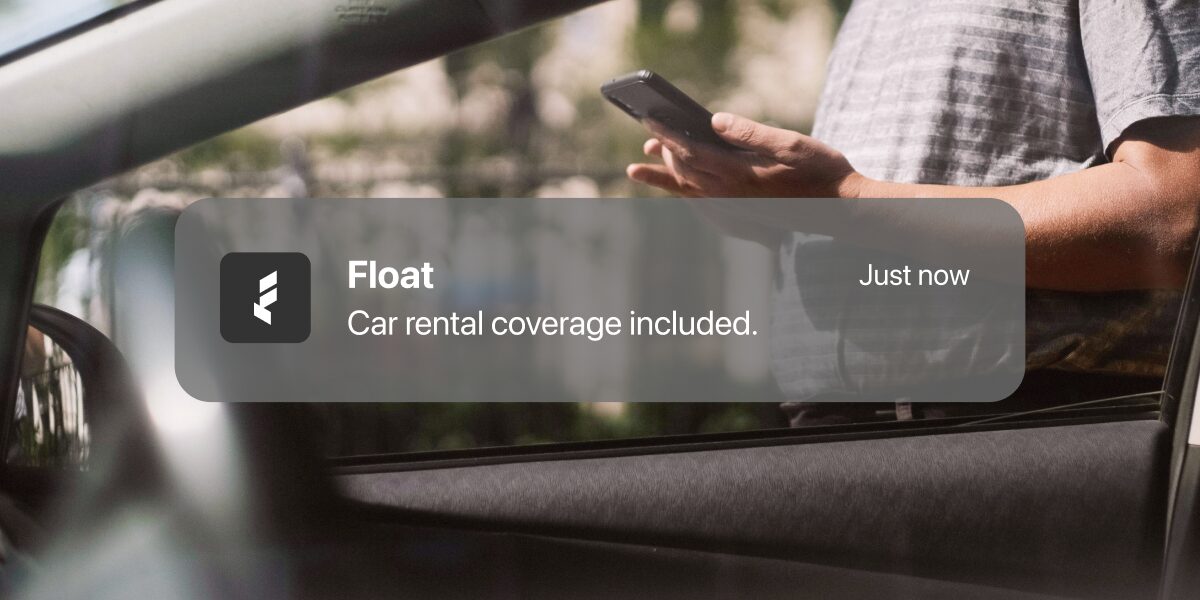
In this article, we’ll explore what car rental insurance on credit cards looks like and show you how to choose the right credit card for your needs. Plus, we’ll introduce Float’s new car rental insurance coverage for US and Canadian credit cards and share why it’s a go-to for small business owners and founders.
What is car rental insurance on credit cards?
Credit card car rental insurance coverage is a built-in benefit that can save your business hundreds or thousands of dollars per year. Essentially, it covers damage or theft of a rental car if you pay for the rental using that specific credit card and decline the rental agency’s insurance. (We’ll get deeper into the eligibility requirements below.)
Business credit cards with car rental insurance vary, but most offer comprehensive Collision Damage Waiver (CDW) or Loss Damage Waiver (LDW) protection. This typically covers the following:
- Collision damage: If your rental car is damaged in a collision or accident, you’re covered even if you’re the one at fault.
- Theft: If someone swipes your rental, the insurance will cover the cost up to the manufacturer’s suggested retail price (MSRP) of the car to a certain dollar amount, typically between $65,000 and $85,000.
- Loss-of-use fees: If the rental car is being repaired, this means the rental agency cannot rent it out. The insurance may cover these lost fees.
- Administration: Insurance is heavy on the paperwork, which takes time, energy and expertise. Insurance often covers these costs.
While credit card car rental insurance is fairly comprehensive, there are a few things it may not cover:
- Third-party liability, such as damage to other vehicles or injuries to people
- Luxury rental vehicles (say goodbye to that Lamborghini!)
- Oversized vehicles like trucks, cargo vans or recreational vehicles
- Motorcycles
- Rental vehicles used for commercial driving (such as for Uber)
- Loss of your personal belongings
How credit card car rental insurance works in Canada
When it comes to car rental insurance credit cards, you’ve got to pay special attention to the eligibility requirements. If you don’t follow them to the letter, you’ll be out of luck if an issue arises.
Here are the typical eligibility requirements for credit card car rental insurance in Canada:
- You must pay for the entire rental with the credit card: You can’t make partial payments or split payments across multiple cards.
- You must decline the rental agency’s CDW or LDW: If you accept the rental agency’s policy, the credit card coverage may not apply.
- You must be the primary cardholder: You should also be listed on the rental agreement.
- You must use the card for a qualifying rental period: Cards often have a cap coverage for a specific number of consecutive days per rental, such as 15 to 48 days.
One key difference between car rental insurance on your corporate credit card and rental agency insurance is that your credit card provides the insurance at no extra cost (other than the annual fee for the credit card, if there is one). If you purchase the insurance policy from the rental agency, you’re typically looking at somewhere between $10 to $50 a day or more—not an insignificant amount for small business owners and founders with a strict eye on their bottom line.
Rental agency insurance is activated immediately at the counter at the time of purchase, and can sometimes have a simpler claims process as compared to credit card rental insurance which requires some paperwork. However, you pay for the convenience of rental insurance.

Best business credit cards
Compare top options, fees and benefits for Canadian companies.
What to look for in a business credit card with car rental insurance
If you’re wondering how to choose the business credit card to ensure you have the car rental insurance you need, consider these factors:
- Coverage scope: Look at what’s actually covered, such as collision, theft and loss-of-use fees. You also want to look at what’s not included (like certain vehicle types or geographic locations).
- Claim limits: Beware! Some policies cap vehicle values below the current market rate.
- Coverage duration: Consider how long you and your team typically rent cars for and whether that aligns with the coverage period.
- Domestic vs. international coverage: If you travel outside Canada for business, ensure international rentals are included and check whether currency impacts claims.
- Employee and contractor coverage: Some car rental insurance credit cards only cover the cardholder while others extend coverage to employees and contractors.
- Ease of claims: You don’t want to be ripping your hair out. Look for clear, well-documented claims processes and business travel support.
- Credit card fees: Some credit cards that offer rental insurance have high fees, while others don’t have any—like Float!
How car rental insurance helps reduce business travel costs
With the right credit card benefits, you can see some major savings on your corporate travel costs.
Let’s do some simple math: If you purchase the car rental company’s CDW/LDW, you’re looking at somewhere between $10 to $50 per day—or more.
For a week’s rental for one person, that’s already $70 to $350 in savings if you use your credit card’s rental insurance instead. If you’ve got three employees who each rent a car for a week-long industry conference, you’re already up to $210 to $1,050. For a small business or startup, those costs can really add up if these events happen regularly for your staff or certain departments are always on the road.
If your business credit card includes car rental insurance, you can skip the rental company’s coverage and avoid unnecessary costs. It’s an easy win for high-travel businesses.
In addition to all of the financial savings, you’ll also get peace of mind with the right car rental insurance credit card. And that’s pretty much priceless!
Who benefits most from car rental insurance credit cards
Credit cards that offer car rental insurance aren’t right for every small business or startup. However, there are some types of businesses that will see a notable difference in their travel expenses if they choose the right card.
Professional service firms
Accounting firms, law firms, marketing agencies, consulting firms and other similar businesses often travel to see clients and attend conferences and meetings. Using car rental insurance credit cards means predictable, clean travel expenses for reimbursement.
Construction and field-based teams
If you’re in the trades, engineering, inspection, project management or a similar area, your jobs happen in unpredictable environments. You may have multiple vehicles rented on short notice. Credit card car rental insurance protection reduces reliance on expensive rental agency policies.
Businesses with frequent domestic or cross-border travel
For sales teams, executives, expansion-stage companies and others, cross-border travel introduces another level of complication. Some credit cards like Float offer coverage on both CAD and USD credit cards, which means you get peace of mind no matter which card you use.
Companies managing employee travel at scale
If you’re part of a mid-market or growing team, you may have dozens or even hundreds of rentals per year. You need to reduce per-trip insurance costs at scale, which can be done with the right business credit card.
Car rental insurance credit card options in Canada
Now that we’ve gone over what to look for in a provider, the benefits you can expect, and industries that would benefit, it’s time to compare options.
Let’s explore traditional bank credit cards, travel credit cards and modern options like Float to see car rental insurance offerings. Here are some of the best credit cards for rental car insurance in Canada.
Why Float’s car rental coverage stands out
Designed for Canadian businesses managing employee spend, Float’s corporate card helps optimize rental car costs with built-in CDW coverage on eligible CAD and USD Float corporate cards. Coverage applies to eligible rentals paid for using the Float corporate card, subject to policy terms and limits.
Many traditional bank credit cards and premium travel credit cards often offer comprehensive travel benefits. Customers may get coverage for lost baggage or cancelled flights in addition to rental car insurance, which may contribute to the higher annual fees on some of these cards. However, customers at Float have told us time and time again that those bells and whistles aren’t what they need. Small businesses and startups that use Float are looking for car rental insurance—without all of the extras. That’s what you get with Float: exactly what you need.
What really makes Float’s car rental coverage stand out is that it comes with no extra cost. Other credit cards, like the Business Platinum Card® from American Express, come with high annual fees. Float’s corporate card, on the other hand, has an annual fee of $0.
By choosing Float, many businesses can avoid purchasing pricey rental insurance, while keeping travel expenses streamlined on a single card.
Float: A modern credit card for car rental insurance coverage—and so much more
Running a small business or startup means you’ve got to keep a constant eye on your expenses. If you and your team frequently rent cars for business travel, you could be sending thousands of dollars down the drain by buying the rental agency’s insurance coverage.
When you choose a business credit card like Float—which offers built-in CDW coverage for rental cars at no additional cost—you can not only save on business travel, but also get a little more peace of mind. There’s no need to purchase additional insurance, and Float helps keep rental expenses organized and easy to track without complicating your expense reports.
Explore coverage options when selecting your business credit card and choose a solution designed for your business. Check out Float’s car rental insurance coverage, no annual fees and other perks today.

Try Float for free
Business finance tools and software made by Canadians, for Canadian businesses.