7 Best Business Credit Cards Canada 2026
In this article

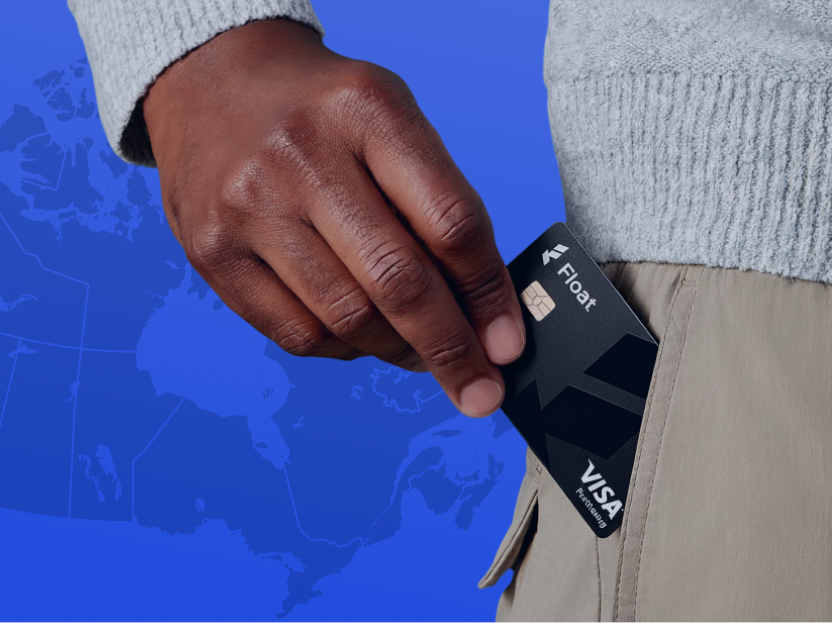
Finding the best business credit card in Canada depends on your unique situation and how your company spends money. A founder-only business can use a simple rewards card when the owner is the only spender. A growing team, on the other hand, needs more from their cards and the platform that provides them.
This guide helps you evaluate cards by use case, card types and funding models to determine which option best aligns with your team’s size, needs and finance workflows.
What is a business credit card?
A business credit card is exactly what it sounds like, a credit card built for business spending. Whether you’re a sole proprietor or running an incorporated company, it helps keep your work expenses separate from your personal ones (because no one wants to sort through a messy statement at tax time).
The real value shows up day-to-day: digital advertising spend, recurring subscriptions and software, covering vendors while you wait on client invoices. Business credit cards are built for exactly this, with perks tailored to how companies spend. For growing businesses, they also mean better spend visibility, smoother cash flow, and a business credit profile that pays off when it's time to scale.
Types of small business credit card providers in Canada
Credit card providers for small businesses typically fall into two categories: cards from traditional banks and cards from modern fintech providers.
Traditional banks offer corporate cards with familiar perks. However, banks often design these cards with larger, established companies in mind, which means higher fees, more paperwork and slower approval processes. In some cases, we’re talking about weeks to open a credit card (if you get approved at all).
On the other hand, fintech providers are bringing business credit cards into the modern age. With fast approvals, virtual cards, real-time expense tracking and integrations that actually talk to your accounting software, they’re built for businesses that want more control and less hassle. For example, you can open an account with Float and get started with a corporate card in close to 24 hours.
💡Pro tip: This is also a good time to learn about the different types of credit and charge cards that small businesses can leverage.

Try Float for free
Business finance tools and software made by Canadians, for Canadian businesses.
Business card types compared
Before you go all in on a provider, it’s worth understanding the types of business credit cards that are available. Each is structured slightly differently to suit different spending habits. Use the table below to better understand these types before you start comparing fees, rewards, or integrations.
If the business only needs one card for the owner or a handful of employees, a traditional card may be enough. If the company needs cards for vendors and employee spend along with detailed receipts and invoices, evaluate the surrounding workflow alongside the card to get a better idea of which type of card you need.
What to compare before choosing a card
Annual fees and rewards are easy to compare. The harder questions show up once people start spending. Here are several questions to consider:
- Eligibility: Does approval depend on personal credit, business revenue, time in business, cash on hand or incorporation status?
- Personal guarantee: Will the owner be personally liable for the balance?
- Repayment model: Is the card prepaid, revolving credit or a charge card paid in full on a schedule?
- Credit limit or spend capacity: Can the card support normal operating spend, larger purchases and share spending power across unlimited physical and virtual employee cards?
- FX and cross-border spend: What happens when the business pays in USD or buys from global vendors?
- Employee controls: Can finance set card limits, merchant rules and approval policies by person, team or vendor?
- Receipts and accounting: Does the workflow capture receipts, memos, GL codes, tax codes and sync-ready data?
- Accounting tool compatibility: Does the card offer direct sync with your accounting tool, such as QuickBooks Online, Xero, or NetSuite?
- Canadian tax support: Can the card workflow handle GST, HST, PST and QST? A single receipt may need treatment for all four tax types.
- Bilingual support: Does the provider support English and French? Teams, approvers and vendors across Canada may need both, especially when invoices arrive in either language.
Business credit cards in Canada compared
With those questions in mind, here’s how some of the top Canadian business credit cards stack up across funding models, fees, and where each one might fall short.
Float: cards, limits, bill pay and accounting in one place
Float combines corporate cards, expense management, employee reimbursements, bill payments, Business Accounts, CAD/USD FX and accounting sync in one place for Canadian businesses. It helps finance teams control and automate spend while reducing manual work and improving visibility. Beyond card rewards, Float customers save on fees, earn interest on their balance, and cut down on manual work with built-in AI that handles receipt capture, matching and transaction coding automatically.
There are two funding models for teams to explore.
Use Float’s pre-funded option when you want to spend from your Float balance
Float’s pre-funded option is for businesses that want card access without revolving credit. Teams fund their Float balance, issue cards and spend from the money already held in Float.
This model fits companies that want greater control over spend. Finance can set card limits, issue virtual cards for employees or vendors, collect and automatically match receipts, apply multi-part tax codes and sync transactions to accounting tools. Float Business Accounts can earn {{interest-rate}}% interest on CAD and USD balances.
Pre-funded also helps founders and teams who need access to higher limits than they could qualify for with a bank or traditional credit card provider without an established credit history or a founder personal guarantee. Using a pre-funded model means you can access unlimited virtual and physical cards in CAD/USD with a limit determined by your cash account balance.
Use Float Charge when you need more spend capacity
Float Charge is a charge card model. The balance is paid in full at the end of the term rather than being carried forward with interest.
Charge offers 15- to 30-day terms and up to $3M+ in interest-free unsecured credit. It doesn't require personal guarantees or credit checks. Eligibility includes at least 12 months of operating funding or consistent profitability, plus at least $50K CAD cash or equivalent on hand.
Charge fits companies that want extra spending power while maintaining controls around employee cards, approvals, receipts and accounting data.
When Float is the best fit
Float is particularly useful when the card program connects to broader finance workflows, like when:
- Employees need virtual or physical cards with clear limits
- The company spends in both CAD and USD
- Finance needs receipts, memos, categories and GL codes on transactions
- Canadian tax codes need to capture GST, HST, PST or QST
- Card spend, bills and reimbursements need to land in the same accounting process
Good fit if: You want employee cards, finance controls, accounting-ready data and Canadian tax support in one platform.
Tradeoff: Less useful if you only want a simple owner card for rewards and don't need employee spend workflows.
Loop: frequent multi-currency spend
Loop is built for cross-border money movement. It supports CAD, USD, EUR and GBP accounts, corporate cards, global payments and FX tools.
Plans Basic ($0/month), Plus ($79/month) and Power ($299/ month). FX markups drop as you upgrade your plan, going from 0.47% on Basic to 0.12% on Power. Teams can avoid foreign transaction fees when they spend from matching currency balances.
Loop makes the most sense when currency is the biggest headache. Importers, e-commerce companies, agencies with US clients and businesses paying global suppliers will likely get more value from the account and payment setup than a traditional rewards card.
Good fit if: Multi-currency accounts, FX, or supplier payments are your main pain point.
Tradeoff: Not built for deeper tax coding, month-end close workflow or reimbursements around card spend.
Venn: a focus on low-cost cards
Venn bundles corporate cards, accounts, payments, FX and spend management for Canadian companies. Plans are Essentials ($0/month), Plus ($40/month) and Pro ($100/month).
Cards earn 1% cashback and accounts earn 2% interest. FX rates vary by plan, (0.25% on Pro). Cashback is capped on Essentials and Plus plans, but unlimited on Pro and Custom plans.
Venn is a practical option for smaller teams that want a lower-cost account and card bundle.
Good fit if: Your priority is a low-cost card and account package rather than a more comprehensive financial management platform.
Tradeoff: Venn is more focused on the core card, account and payments offering than on the deeper finance-team controls, automation and workflows available in more comprehensive spend-management platforms.
Keep: rewards for Canadian small businesses
Keep is a card-first option for Canadian SMBs, with up to 56 interest-free days, unlimited virtual cards, expense management and rewards.
You’ll earn 1.5x points on card spend, 3x points on dining and FX and 5x points on travel booked through the Keep Travel Portal. Keep also offers no-FX card spend and financing.
Good fit if: Rewards are a major part of the decision and the business wants a modern card product.
Tradeoff: Not available in Quebec. They also offer lighter tax-code workflows, bill pay and reimbursements in the same system.
Ramp: Canadian cards for US-led teams
Ramp is a US-built spend management company offering corporate cards, expenses, bill payments and global spend tools. Its cards are issued in Canada by Peoples Trust pursuant to a Visa license.
Ramp works well for companies with US operations or finance teams already built around US software. It has mature spend-management features and global reach.
Before Canada-first teams commit to Ramp, you’ll want to confirm:
- How it handles GST/HST/PST/QST
- Whether they offer English and French support
- How they support CAD and USD balance or funding
- Its Canadian payment rails and support coverage
Good fit if: Your company already runs on a US-led finance stack and needs Canadian card issuing.
Tradeoff: Less direct if the finance team needs Canadian accounts, tax, support and payment workflows by default.
Rippling: card rules tied to employee data
Rippling’s corporate card lives inside Rippling Finance, alongside expenses, procurement, bill pay and travel. Its clearest use case is a company that already uses Rippling for HR, IT or payroll.
The card program pulls from employee data such as role, department or work location to shape policies. That cuts down on admin when cards need to follow onboarding, offboarding or team changes.
Rippling isn’t the obvious choice if you need a Canadian business card. It’s more compelling when the card program needs to sit close to employee data.
Good fit if: Rippling is already your system of record for employees.
Tradeoff: Less of a direct option if the business mainly needs cards, accounts, payments and Canadian tax workflows.
Traditional bank cards: simple rewards
Bank-issued business cards still have their place. They’re familiar, easy to understand and often useful for owner-led companies that mostly want rewards or a card tied to an existing bank relationship.
That said, they’re usually lighter on employee controls, receipt capture, tax coding and accounting sync. For one or two cardholders, that can be fine. For a team with distributed spend, it can add manual work.
American Express Corporate Platinum Card
This card is best suited for companies already considering American Express corporate cards for executive travel and premium card programs. Pricing, eligibility and benefits vary by corporate agreement. The main tradeoff is operational depth: accounting automation, receipt workflows and Canadian tax coding usually require separate tools.
BMO CashBack Business Mastercard
The BMO CashBack Business Mastercard is a straightforward no-fee cashback option from a major Canadian bank ($0 annual fee). It’s a good option for small businesses that want a simple bank card and don't need a full employee-card program.
RBC Avion Visa Infinite Business
The RBC Avion Visa Infinite Business is a solid pick for businesses that value flexible travel rewards. The annual fee is $175, the purchase rate is 19.99%, and the cash advance rate is 22.99%. Businesses earn 1.25 Avion points per $1 on the first $75,000 in annual net purchases, then one point per $1 after that.
TD Business Travel Visa Card
The TD Business Travel Visa Card is a good option for businesses that travel frequently and want straightforward rewards. . Annual fee is $149, plus $49 per additional card. Purchase interest is 19.99%, and cash advance interest is 22.99%.
The card is most useful when TD Rewards are already part of the company's travel setup.
CIBC Aventura Visa Card for Business
The CIBC Aventura Visa Card for Business is a traditional business credit card for companies that benefit from travel rewards and want a provider they already have an existing relationship with. The annual fee is $120 until August 1, 2026, then $139. Purchase interest moves from 19.99% to 20.99% in the August 2026 statement period. Cash interest moves from 21.99% to 22.99%.
Scotiabank Passport Visa Infinite Business Card
The Scotiabank Passport Visa Infinite Business Card is a strong pick for businesses with international spend, thanks to no foreign transaction fees and included travel insurance. The annual fee is $199. The first additional card is $0, and each additional card after that is $50. Purchase interest is 20.99%, with cash advance interest at 22.99%. Foreign transaction fees are $0, with only the exchange rate applied.
What to have ready before applying
Application requirements vary by issuer and card type, but most providers ask for some combination of business and owner information. You’ll want to prepare:
- Business legal name, operating name and contact information
- Business structure: sole proprietorship, partnership or corporation
- Business number, tax ID or incorporation details when applicable
- Industry, estimated revenue, monthly spend and time in business
- Owner or officer information
- Personal credit information, depending on what you are exploring
- Business financials or connected bank data for some corporate card programs
Float Charge works differently. Eligibility is based on business requirements rather than a personal guarantee or credit check. You’ll need at least 12 months of operating funding )or consistent profitability and positive cash flow), plus at least $50K CAD cash or equivalent on hand.
Which business card should you choose?
Choose the card that matches how your business actually spends. A simple rewards card can work for a founder-led company with limited spend, while a growing team needs employee cards, limits, receipts, tax codes, CAD/USD support and clean accounting data.
Float covers both sides of the decision for Canadian teams:. Prepaid gives companies controlled spending from a balance. Charge gives eligible companies more spending capacity without personal guarantees or credit checks.
Compare Float Prepaid and Float Charge, or book a demo to see which model fits your team.
FAQs
What is the best business credit card in Canada?
Float is the best choice for Canadian businesses that want cards plus spend controls, accounting-ready data, CAD/USD support, bill payments and reimbursements. For a simple bank-issued cashback card, BMO CashBack Business Mastercard is a practical no-fee option. For travel rewards, compare American Express, RBC, TD, CIBC, and Scotiabank.
Is Float a credit card?
Float is a complete finance platform for Canadian businesses, offering automated expense management, next-day bill payments, high-yield business accounts and currency exchange, along with two types of corporate cards: a pre-funded option and Float Charge. See how it works here.
What is the difference between Float Prepaid and Float Charge?
Float’s pre-funded option is funded from your Float balance. It’s a good fit for companies that want to spend from available funds and keep close control over cash. Float Charge gives eligible businesses access to unsecured, interest-free terms. It fits companies that want more spending capacity without personal guarantees, credit checks or revolving interest.
Do business credit cards in Canada require a personal guarantee?
Many traditional business credit cards do require a personal guarantee, especially for smaller businesses. Requirements around personal guarantees vary by issuer, applicant profile and the type of card you are applying for.
Float Charge doesn't require personal guarantees or credit checks. Eligibility is based on business requirements, including operating history or consistent profitability and cash on hand.
Which business card is best for USD purchases?
For recurring USD spend, look for USD cards, transparent FX and the ability to hold or move USD without extra conversions.Float supports CAD and USD cards, CAD/USD Business Accounts and CAD to USD or USD to CAD conversion at an all-in 0.25% FX rate.
Which business card is best for employee cards?
Float combination of virtual and physical cards with approvals, limits, and receipt capture reminders makes it a great option for employee cards.
Traditional bank cards can work for owners or small teams, but usually require additional tools as more employees need cards or when finance needs structured controls.

Learn more about Float
Get a 2-minute guided tour through our platform.